
The Pattern-Break Effect
How Disruptive Design Captures Modern Attention
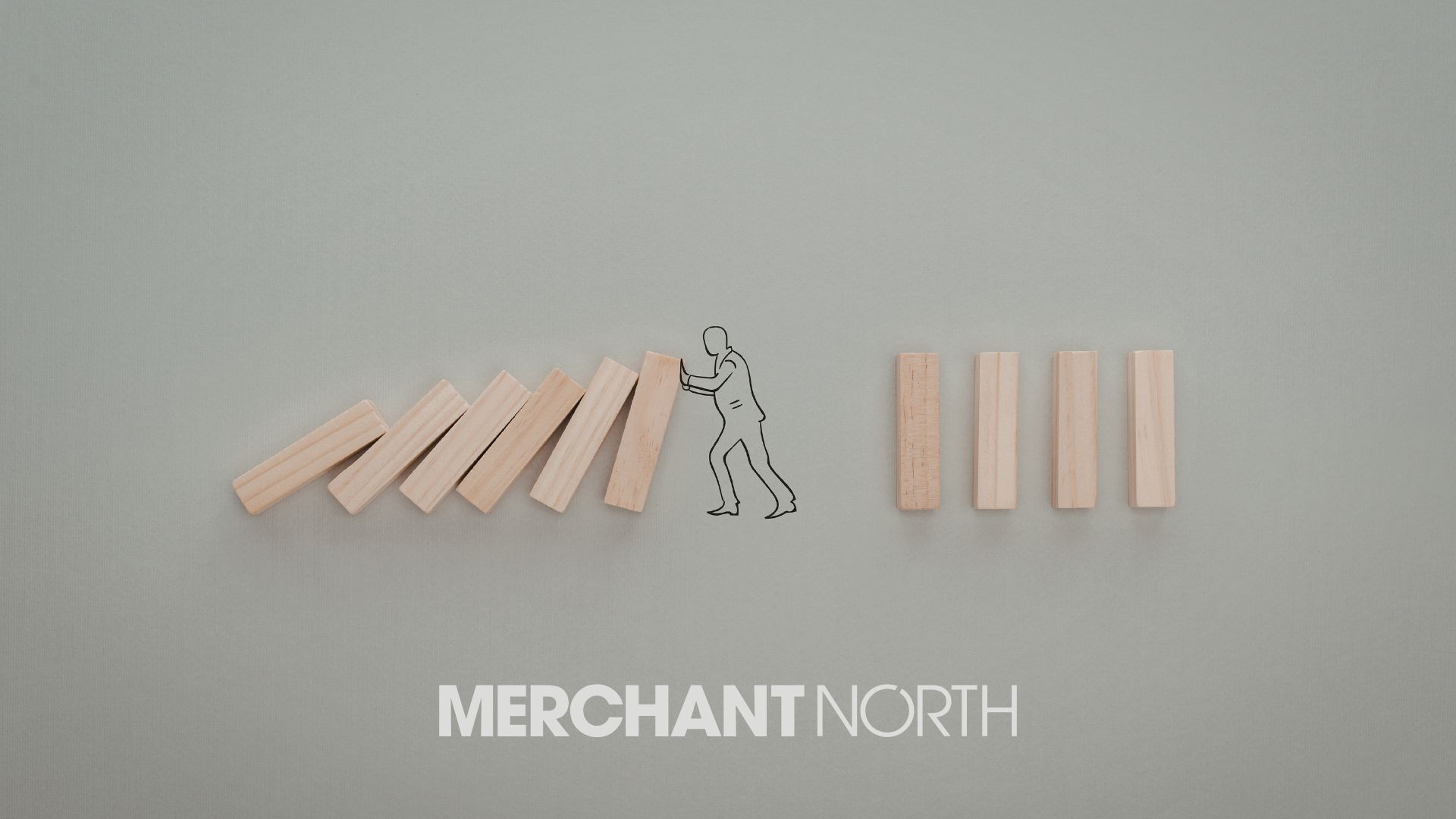
Attention isn't scarce because there's too much content.
It's scarce because the brain filters relentlessly — and most brands are helping it do exactly that.
This is worth sitting with before we get to the strategy. Because the instinct when confronted with an attention problem is to produce more: more content, more frequency, more channels, more targeting precision. Volume as a solution to a perception problem. It rarely works, and the reason it doesn't work is cognitive, not competitive.
Human perception runs on prediction. The brain is not passively receiving the world — it is constantly generating a model of what it expects to encounter next and only surfacing stimuli that deviate from that model into conscious awareness. Neuroscientists call this predictive coding. What it means in practice is that the brain doesn't process most of what it sees. It confirms it, files it, and moves on. Marketing that fits the expected template gets processed and discarded before it reaches conscious attention. It disappears not because it's bad. Because it's familiar.
That is the pattern-break effect, inverted. And understanding how it works — really works, at the neurological level — is what separates disruptive design from designed disruption.
Why Safe Design Is Functionally Invisible
Herbert Simon identified the core problem in 1971: a wealth of information creates a poverty of attention. He wasn't diagnosing social media. He was describing the architecture of cognition. The volume has changed. The mechanism hasn't.
Cognitive filtering is not incidental to the user experience — it is the user experience, operating mostly below conscious awareness. Users don't decide to ignore ads in the top banner position. They simply stop seeing that position. Decades of exposure trained the prediction model. Every subsequent ad that occupied the same location reinforced the filter. Banner blindness, as Jakob Nielsen's eye-tracking research documented, is not a failure of creative quality. It's a failure of location and format predictability. The brain learned the template. The template became invisible.
The same phenomenon operates at the category level. When every healthcare brand communicates with the same palette of authority, safety, and clinical remove — and they almost all do — the category itself becomes background. The consumer isn't choosing between brands. They're not registering the brands at all. Differentiation inside a shared visual and tonal grammar is a nearly impossible task, because the shared grammar is precisely what the brain has learned to filter.
Safe design, then, isn't playing it safe. It's choosing invisibility. The perceived risk of deviation is real. The actual risk of conformity is just less visible — which is, in a way, the whole problem.
What Happens in the Brain When a Pattern Breaks
Something unexpected enters the visual field.
The brain stops.
This is the orienting response — an involuntary neurological reflex first systematically described by Ivan Pavlov, formalized by the Russian neuroscientist Yevgeny Sokolov in the 1960s. Heart rate changes. Pupils dilate. The locus coeruleus releases noradrenaline. Cognitive resources redirect to the unexpected stimulus automatically, before any conscious evaluation happens. This isn't a choice. It's wiring. It evolved to manage threats and opportunities: something changed in the environment, and something changed means attend immediately.
Novelty is the primary trigger. When the brain encounters a stimulus, it doesn't have a prior prediction for it, it releases dopamine — not as a reward, but as a learning signal. The message is: there may be new information here; extract it. Familiar stimuli are processed efficiently and deprioritized. The brain already knows what they contain. Unusual stimuli receive disproportionate cognitive resources because they represent potential new information about the world.
Hedwig von Restorff documented the memory consequences in 1933. Items perceptually distinct from their surrounding context are dramatically more memorable than items that blend in. In a list of similar objects, the one that differs gets recalled. In a feed of similar content, the piece that deviates gets remembered. The mechanism is metabolic: the brain doesn't encode ordinary things deeply because ordinary things don't warrant the energy cost. Unusual things might matter. So, they get stored.
Here is the layer that gets underestimated: genuine cognitive surprise — not just visual novelty, but the subversion of an expectation already established — triggers a simultaneous release of noradrenaline and dopamine that strengthens memory encoding beyond what simple novelty produces alone. When a message violates a prediction, the brain has already made, the resulting mismatch creates a prediction error. That error demands resolution. The brain commits more processing resources to close the gap, holding the message in working memory longer, encoding it more deeply.
The orienting response buys seconds. The prediction error buys retention. These are different mechanisms, and confusing them is how pattern-breaking stays tactical instead of becoming strategic.
The Break Isn't Always Visual
Stop.
Read that sentence again.
That pause — the momentary disruption of rhythm in a piece of writing you were scanning — is a pattern break. It doesn't require neon or asymmetric grids. It requires a deviation from the established expectation of the context. Which means pattern-breaking can operate across every dimension of communication: layout, tone, format, narrative structure, pacing, and silence.
Oatly's packaging broke category convention so completely it looked designed by someone who had never seen food packaging before. Dense text, confessional tone, self-aware commentary where nutritional claims and brand imagery were supposed to live. The visual expectation for that shelf was deeply conditioned. The deviation was impossible to process on autopilot.
Old Spice's 2010 repositioning wasn't primarily visual — it was tonal. Men's grooming had a register: aspirational, earnest, athletic. Old Spice inverted it completely, deploying absurdist humour in a category that took itself seriously. The format was familiar. Everything inside the format was wrong. That wrongness was the point. Liquid Death has since executed a similar inversion at a different cultural temperature — applying the full visual and tonal grammar of heavy metal and extreme sports to canned water, a product with essentially zero intrinsic drama.
Patagonia ran "Don't Buy This Jacket" in the New York Times on Black Friday. Every structural cue of the format — placement, publication, date — pointed toward one message. The ad delivered the exact opposite. The cognitive dissonance was acute enough to generate significant earned media and, paradoxically, real brand affinity and sales lift. Not because it was shocking, but because the shock was coherent. The disruption expressed the brand's actual values with more precision than any conventional campaign could.
Format inversion. Narrative misdirection. Strategic silence — because in a feed saturated with volume and motion, restraint can function as the most disruptive choice available. The pattern-break is whatever the category isn't doing, which requires, as a starting condition, knowing exactly what the category is doing.
Where Disruption Fails
There is a version of this that becomes a license for chaos, and it's worth addressing directly.
The orienting response creates a window. What happens inside that window determines whether the work functions or fails. Disruption creates the opening. Clarity is what happens inside it. When a pattern breaks, the brain wants to know why. It will invest attention in that resolution question — briefly. If the answer arrives coherently and connects to the brand, the surprise deepens engagement and strengthens encoding. If the answer doesn't arrive, or arrives disconnected from anything meaningful, the brain abandons the question. Attention was captured. Nothing was done with it.
Shock without coherence doesn't just fail. It erodes trust. Consumers extend a form of cognitive goodwill when a brand earns their attention — they follow the disruption expecting a payoff. When the payoff doesn't connect to the brand's actual proposition, the message received isn't that the brand is interesting. It's that the brand doesn't know what it's doing. That framing, once established, is slow to correct.
The resolution between disruption and brand identity doesn't need to be immediate or obvious. In fact, some interpretive work on the audience's part strengthens recall — the brain marks meaning it had to work for. But the connection must exist. The disruption must earn its place in the communication system, not simply occupy space in it.
Building the Break with Intention
Effective pattern-breaking is preceded by rigorous category mapping, because you cannot break a pattern you haven't documented.
This means identifying the conventions that define the category at every level: visual grammar, tonal register, message architecture, and format conventions. What does this category always say? What does it structurally never do? What has become so pervasive it's functionally invisible to the people inside it? Those questions establish the envelope. Pattern-breaking is choosing, with precision, which element of that envelope to violate — and having a clear reason for the choice beyond novelty.
Understanding audience expectation requires getting below what people say to what people do before they've had a chance to rationalize either. Most category conventions are held below conscious awareness. Consumers can rarely articulate the norms that govern their experience of a category — they only know when something feels off or unexpectedly arresting. The useful insight lives at the behavioural and associative level, not the stated preference level.
Break selectively. The instinct, once the framework clicks, is to disrupt everything at once — tone, layout, format, message structure simultaneously. This typically produces incoherence rather than impact. The most effective disruptive work holds most elements stable while violating one or two expectations with precision. The familiar context creates the expectation. The deviation creates the interruption. Too much deviation at once removes the baseline against which the break registers. There's no pattern to break.
Anchor every disruption to brand identity. A campaign can generate attention once. An identity generates attention repeatedly, across every touchpoint and over time, because the disruption becomes part of the brand signature — a recognizable quality of unexpectedness that audiences come to associate with the brand. This is a paradox worth sitting with: it's possible to train an audience to expect your unpredictability. When disruption is consistently aligned with core values and positioning, it becomes a form of recognition — not despite its unconventionality, but through it.
The Normalization Problem
The half-life of any pattern-break is shorter than most brand systems are built to accommodate.
What disrupts attention does so precisely because it deviates from established norms. The moment it becomes a norm, the mechanism stops working. The brain has updated its prediction. The formerly disruptive element is now expected. It gets processed and discarded like everything in the template, and whatever budget is still running, it is funding background noise.
Flat design is the clearest recent illustration. It emerged as a genuine departure from skeuomorphic conventions — the textured, bevelled, drop-shadowed aesthetics of early digital interfaces. It felt clean and modern because it broke those conventions. Within a few years, it was the convention. Every app, every SaaS interface, every digital creative spoke the same visual language. What had been disruptive had become the template the next disruption needed to break.
The same compression applies to tone. The dry, self-aware, anti-marketing register that brands like Innocent Smoothies and Oatly pioneered is now imitated widely enough that it has become its own category — the "quirky brand voice" template. When every brand is performing deliberate un-corporateness, that register stops signalling anything distinctive. The pattern-break became the pattern, which is exactly when it stops working.
The strategic challenge this creates is real: continuous reinvention inside a coherent identity. The brand that chases disruption as a goal ends up incoherent — a sequence of disconnected campaign aesthetics with no through-line. The brand that stops evolving ends up invisible, absorbed into the category wallpaper it once disrupted. The resolution is in understanding which elements of the brand are core identity — the invariants that persist across every expression — and which elements are the disruptive surface that generates attention. Core identity doesn't change. The disruptive surface must. Recognizing which is which, and protecting that distinction under real operational pressure, is a discipline that must be built into how the brand operates — not discovered during the debrief of a campaign that stopped performing.
When Attention Becomes Something More
Capturing attention is the first gate.
Holding it requires coherence — the moment of interruption followed by clarity of purpose, message architecture that rewards the attention it has borrowed, creative execution that connects disruption to meaning without demanding interpretive work the audience won't do.
Converting attention into preference requires something more deliberate. Repetition with variation: not consistency of execution, which recreates the template problem, and not constant reinvention, which produces incoherence. The specific discipline of varying the surface expression while sustaining the underlying identity, so that each encounter with the brand is simultaneously recognizable and slightly surprising.
Memory research supports this directly. The spacing effect tells us that repeated exposure to a stimulus, with variation and an interval between repetitions, produces stronger long-term memory than massed identical repetition. The brand that finds ways to surprise within a recognizable identity framework isn't just capturing attention more effectively in any given moment. It's encoding itself more deeply into long-term memory with each encounter. Familiar enough to be trusted. Unexpected enough to be remembered. Those two qualities, held together under genuine strategic and creative discipline, are difficult to achieve and nearly impossible to replicate without understanding what's driving them.
The pattern-break effect, then, is not a campaign mechanic. It is a design principle for an entire brand system. The question at every stage of brand communication is not what would be disruptive, but what expectation has this context established — and where is the most precise point of deviation?
That deviation, executed with coherent intent, is how brands that genuinely understand the attention economy build the one form of competitive advantage that resists commoditization: the capacity to be consistently, memorably, and meaningfully unexpected.
The market doesn't reward safety. It rewards signal.
The brands that master this don't just capture attention. They earn the cognitive space that converts attention into memory — and memory into the quiet, persistent preference that drives choice when options are multiplying and the brain is, as always, filtering relentlessly.